QuHarrison Terry joins us for Move with Purpose Run
We have Exciting news!!
QuHarrison Terry, author, growth marketing leader, and venture capitalist, is joining YouMeWe for our Walk on October 10th, as he gears up for the Great World Race!
For anyone who hasn't heard of it: the Great World Race is one of the most extraordinary endurance challenges in the world: seven marathons, on seven continents, in a single week. Between November 12–21, 2026, runners will race from Antarctica to Cape Town, Perth to Singapore, the Algarve to Cartagena, and finally Miami, chasing a finish line across the entire globe.
Here's what makes it even more special to us: YouMeWe will be in Singapore in November to cheer QuHarrison on as he takes on that leg of the race. We can't think of a better way to kick things off than walking alongside him first, right here in Tokyo, in support of the vulnerable youth we serve every day.
Join us for our Walk on October 10th. Every step matters for QuHarrison's race and for the young people counting on YouMeWe.
#YouMeWe #GreatWorldRace #TeenEmpowerment #Tokyo #Singapore #NonprofitLife

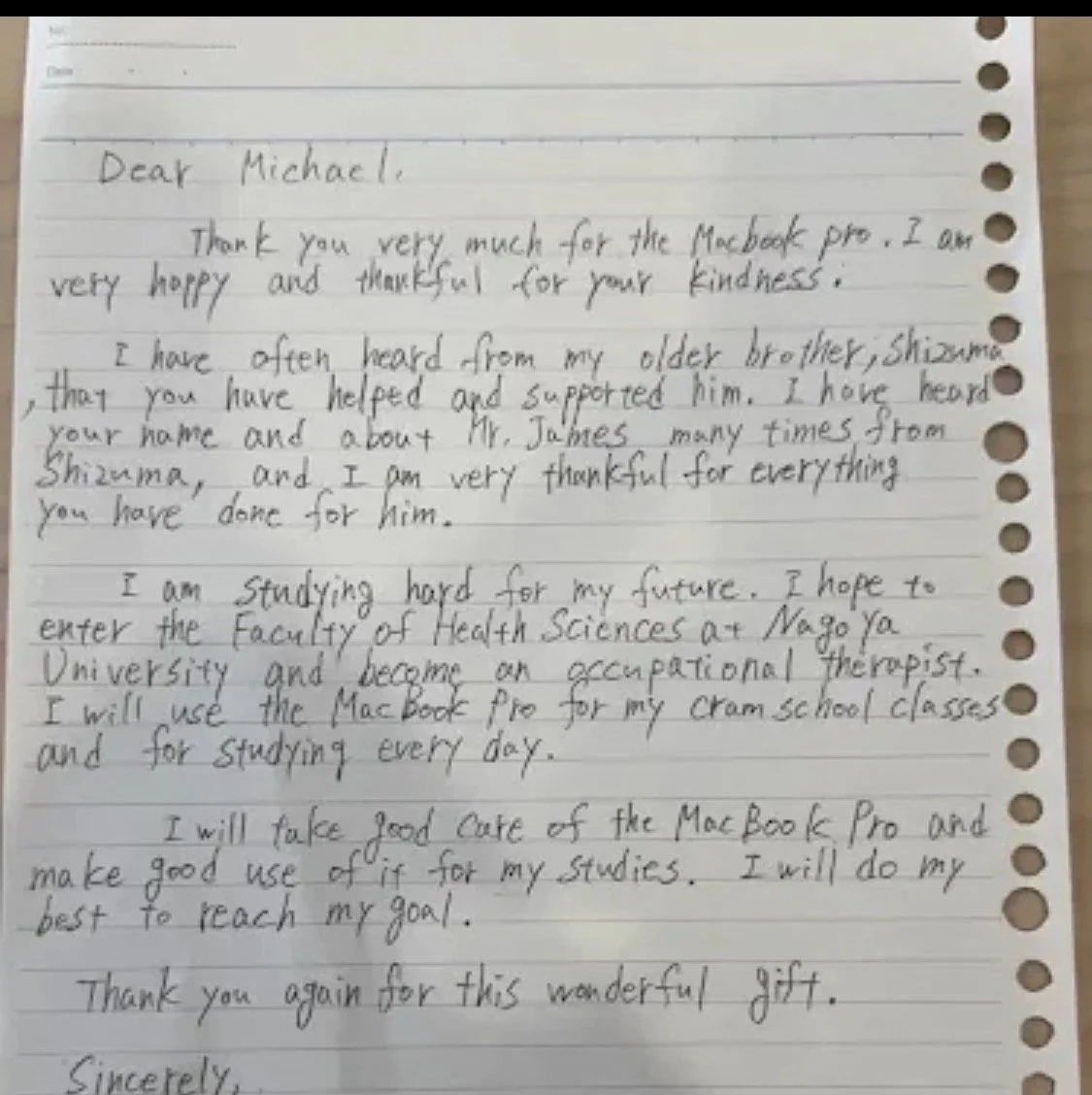
“I am studying hard for my future”
This note came from a young person we support who hopes to study health sciences at Nagoya University and become an occupational therapist. They’re putting in the work. We want to help fund the scholarship that will support their next step.
We need 50 more sign-ups for the virtual walk or live walk on October 10th to make it happen. Will you be one of them?
#YouMeWeNPO #YouthEmpowerment #ForTheYouth
Move With Purpose Run
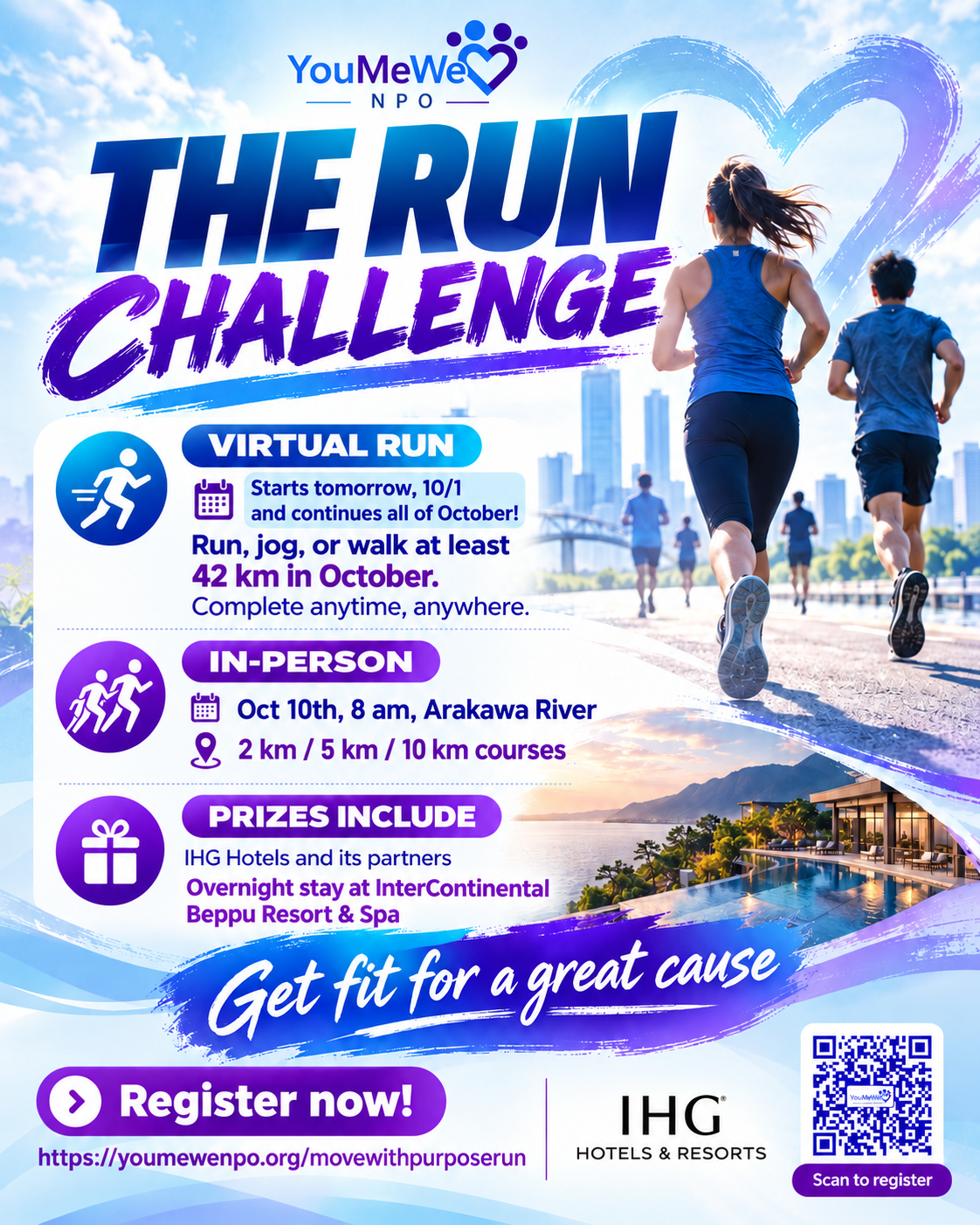
The Run Challenge is an annual virtual and in-person event organized by NPO YouMeWe. There are two ways to take part, and you're welcome to do one or both:
Virtual Challenge: Run, jog, or walk at least marathon distance (over 42km) within the month of October. You can complete it in a day or in stages (just 1.35km per day!), any time, anywhere, solo or in a group.
In-person Move With Purpose Run: Join us on Saturday October 10th from 8am on the Arakawa River, with a choice of 2km, 5km, or 10km courses. If you sign up for the Virtual Challenge, entry to the in-person fun run is free. Its a great way to help reach your goal and meet other likeminded runners, joggers, and walkers.
Thanks to IHG Hotels, there are fantastic prizes in the draw for those completing the challenge. In particular, an overnight stay for two at the stunning ANA Intercontinental Beppu Resort & Spa.
To learn more, check out the YouMeWe website here:
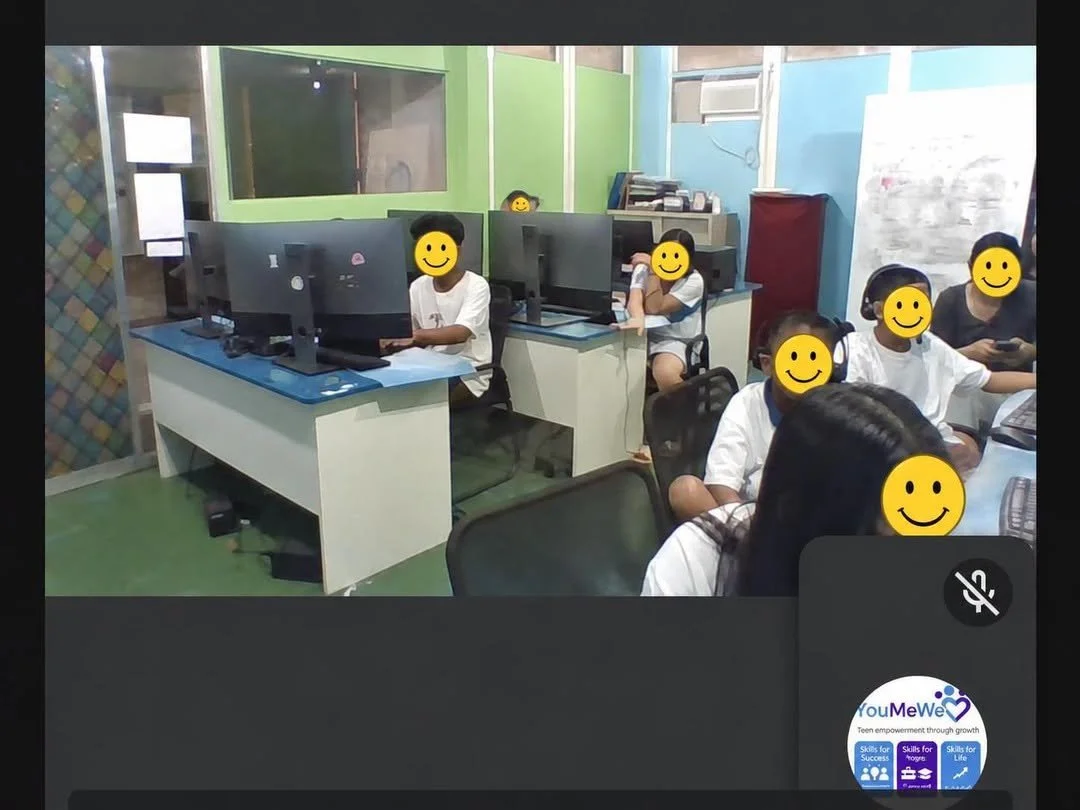
Cultural Day for Matsubaen
Volunteers from Tata Communications visited Matsubaen to introduce the children to life in Hong Kong and explore how it differs from life in Tokyo. The session covered a variety of topics, including work culture, cuisine, customs, and differences in everyday perspectives and mindsets.
The children also had the opportunity to try snacks from Hong Kong and enjoy a pizza party together. Through this experience, the volunteers helped the children broaden their horizons and gain a greater understanding of what it can be like to live and work overseas, while encouraging them to consider the different opportunities and perspectives that come with experiencing life in another country.
#YouMeWeNPO #TataCommunications #Matsubaen
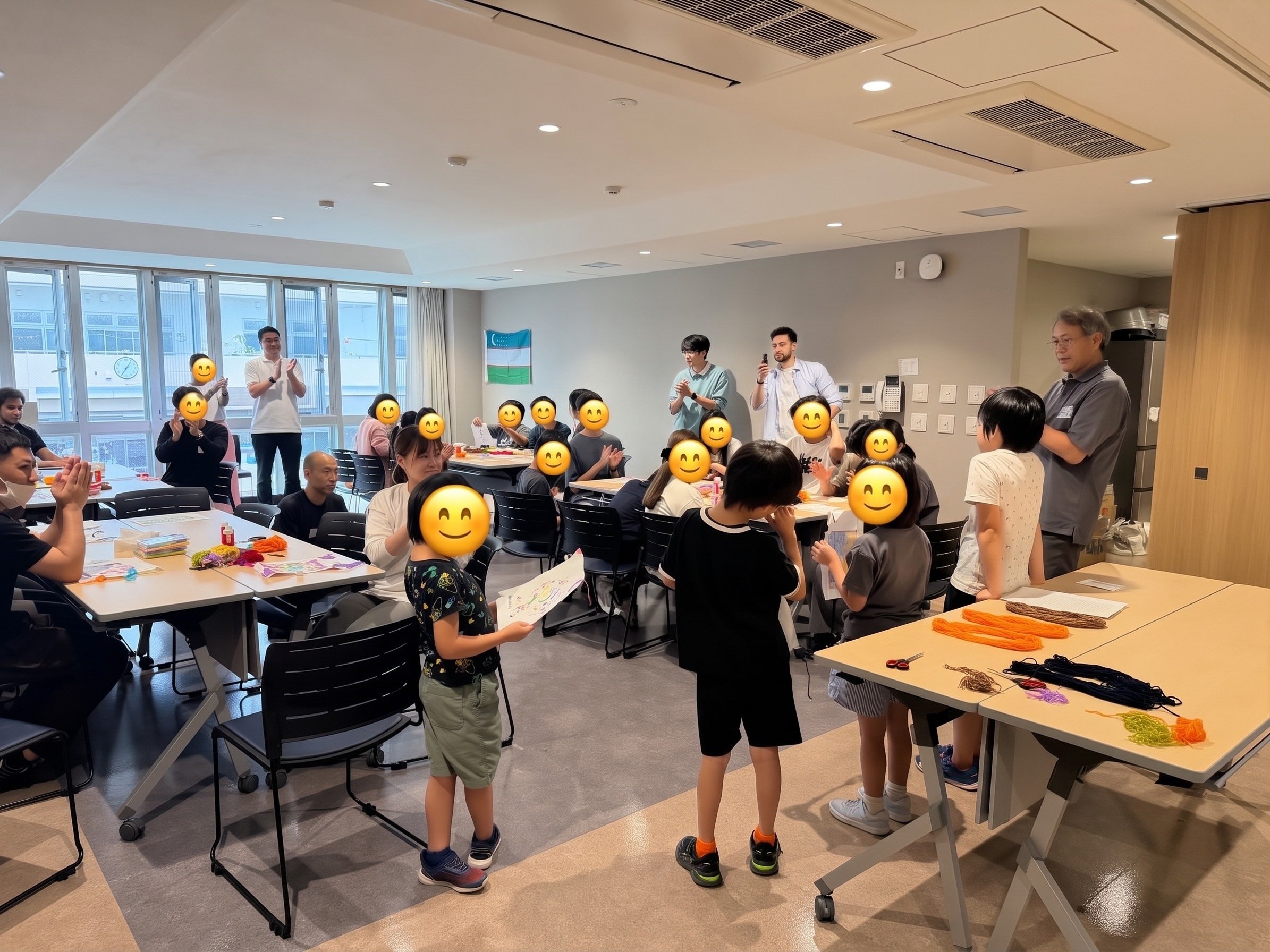
Uzbekistan Culture Day at Tokyo Katei Gakko
Uzbekistan Culture Day at Tokyo Katei Gakko. The children explored patterns and made colorful crafts together, with plenty of conversation around the tables.
Thank you to JICEF for collaborating with us, and to everyone who helped make the day possible. We’re grateful for the chance to share experiences like this with the children.
#YouMeWeNPO #JICEF #UzbekistanCultureDay #CulturalExchange
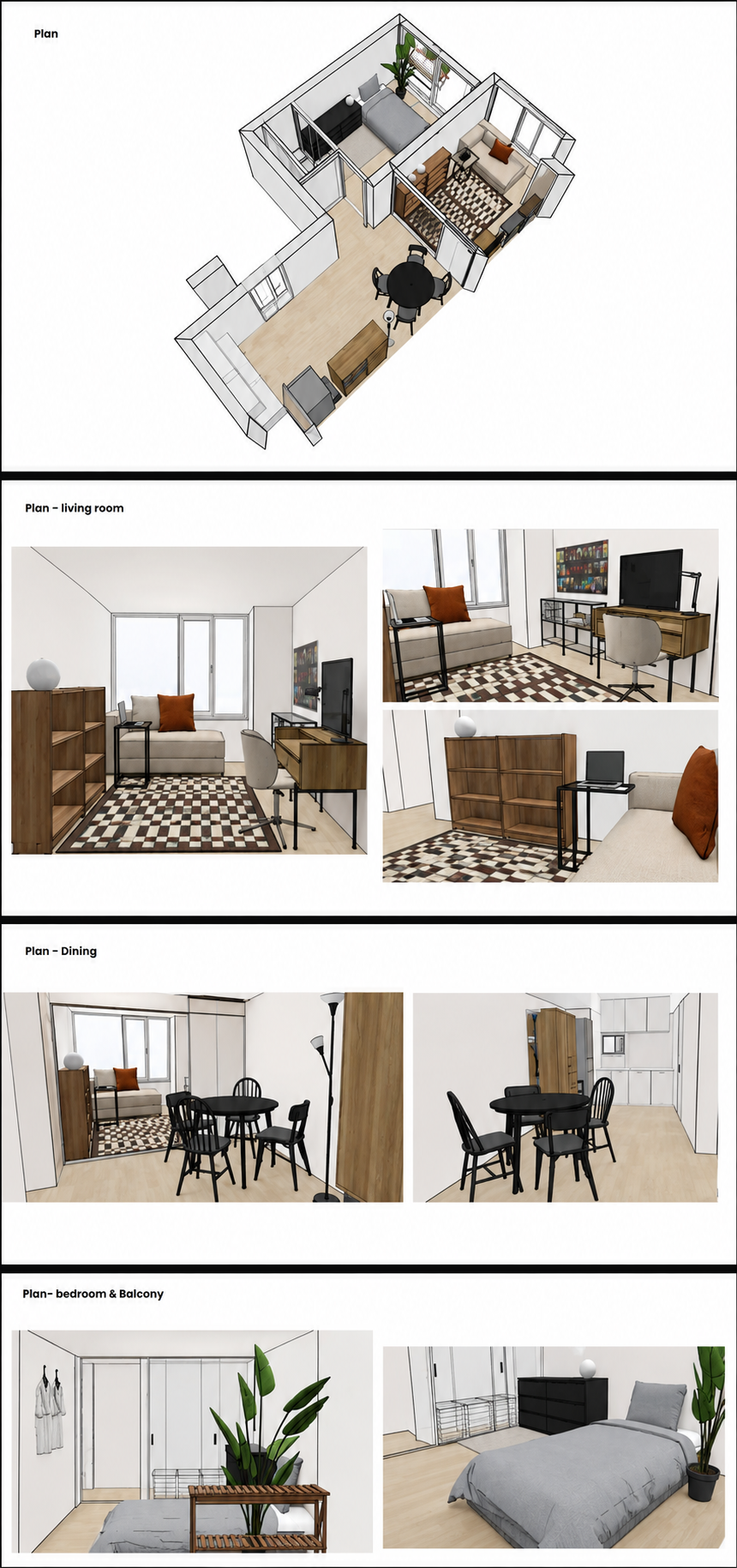
Apartment Decor
One of our Ambassadors has aged out of care and is now employed. His younger brother has moved into his apartment, and this plan shows how he imagined making the space his own. And now it is a reality.
We’re especially proud of the way they inspire each other to reach higher than where they started. Having a place to make your own is one part of building life after care.
#YouMeWeNPO #YouthInCare
From Social Work to Community Impact: Meet Lauren Towe
Volunteer Spotlight | YouMeWe NPO
Lauren Towe came to YouMeWe as a licensed social worker, and her background is in nonprofit service, disability support, hospice and palliative care, and community engagement. While living in Tokyo, she was looking for a way to use those experiences in a meaningful, hands-on way. What began as an opportunity to volunteer quickly became something much larger.
Today, Lauren supports YouMeWe across program coordination, outreach, volunteer and intern management, events, fundraising, grants, communications, and organizational development. Her work reflects the same principle that has guided her throughout her social work career: people thrive when they are given meaningful opportunities, practical support, and a community willing to invest in them.
Finding YouMeWe
Lauren’s path to YouMeWe grew naturally from her professional background. She is not only a licensed social worker but also holds a Master of Social Work and has spent much of her career and training working alongside people navigating difficult circumstances, including children and families, people with disabilities, individuals receiving hospice and palliative care, and communities facing barriers to opportunity. When she came to Japan, she wanted to continue doing work rooted in service, human connection, and social impact.
“I have always been drawn to work where you can actually see how relationships, resources, and opportunities affect someone’s life,” Lauren says. “YouMeWe immediately stood out to me because the mission is not about simply doing something for children in care. It is about helping create opportunities, experiences, skills, and connections that they can carry with them.”
She joined the organization and quickly found herself involved in nearly every part of its work. “I don’t think I ever really had a period where I was just watching from the sidelines,” she says. “There was work to do, and I wanted to be useful.”
Bringing Social Work Into Nonprofit Operations
Lauren’s role at YouMeWe extends well beyond any single program. She has helped coordinate interns and volunteers, communicate with children’s homes, organize events, research funding opportunities, support grant applications, strengthen internal systems, build outreach processes, develop communications, and connect YouMeWe with potential corporate and community partners.
For Lauren, these responsibilities are closely connected to social work. “Social work teaches you to look at the whole system,” she explains. “You are always asking: What does this person need? What resources already exist? Where are the barriers? Who needs to communicate with whom? What is preventing something from moving forward?” That systems perspective has shaped the way she approaches YouMeWe’s work.
A program for children cannot succeed without relationships with children’s homes. A donated computer only becomes meaningful when a young person knows how to use it. Volunteers need support and direction. Programs need funding. Events require planning. Partnerships need communication. And behind all of those pieces are people. “That is probably where I feel most at home,” Lauren says. “I like connecting the pieces and figuring out how we can make something actually work.”
Creating Opportunities Beyond The Classroom
One of the things Lauren values most about YouMeWe is the variety of ways the organization supports children and young people in care. Programs such as Designing Artists Academy, Skills for Life, A250, Empower Village, and Tanoshimi Circle give children opportunities to explore creativity, technology, independence, communication, digital literacy, mentorship, and community connection.
For Lauren, the importance of those programs goes beyond the individual activities. “Children in care deserve access to the same kinds of experiences, networks, technology, encouragement, and chances to explore their interests that other children may take for granted,” she says. “Sometimes one workshop, one mentor, one skill, or one person who takes an interest in you can open a door that did not seem available before.”
Her social work background has also made her particularly conscious of the importance of dignity and choice. “I never want the children we work with to be reduced to their circumstances,” she says. “They are artists, gamers, future professionals, students, creators, athletes, introverts, extroverts, kids who love technology and kids who could not care less about it. The point is to give them opportunities to discover who they are and what they want.”
Building Bridges Between Children’s Homes And The Wider Community
A significant part of Lauren’s work has involved outreach. YouMeWe offers programs and resources to children’s homes, but building new relationships takes persistence. Lauren has worked on outreach to homes, community organizations, companies, foundations, volunteers, and potential supporters.
She has learned that even when a program is free, creating a successful partnership requires trust. “You cannot just send an email and assume people are going to say yes,” she says. “Children’s homes are incredibly busy. Staff are responsible for the wellbeing of the children in their care, and outside organizations have to demonstrate that they are reliable, respectful, and worth making room for.”
That means following up, listening, adapting, and sometimes finding a completely different approach. Lauren sees that relationship-building as one of the most important parts of nonprofit work. “You can have the best program in the world, but if you cannot build trust with the people you want to work with, it does not matter,” she says.
Technology As Access, Not Simply Equipment
Technology has become another major focus of Lauren’s work at YouMeWe. The organization’s digital initiatives aim to make sure young people in care have access to devices, digital literacy, and the skills needed to participate fully in modern education and employment.
One recent milestone was the donation of more than 250 MacBooks from KPMG. For Lauren, the significance of that donation is not simply the number of computers. “A laptop can be a school tool, a creative tool, a communication tool, a job-search tool, or the first place someone learns a skill that eventually becomes a career,” she says. “But handing someone a computer is not enough. Access and education have to happen together.” That philosophy is reflected in YouMeWe’s broader digital-literacy work and initiatives such as A250.
Lauren believes technology education is becoming increasingly important as artificial intelligence and digital tools reshape workplaces and classrooms. “Digital literacy is becoming basic literacy,” she says. “Young people need to understand how to use technology, how to evaluate information, how to stay safe online, and increasingly, how to work alongside AI. Children in care cannot be left behind in that transition.”
The Work Behind The Programs
Some of Lauren’s most important contributions happen far from the spotlight.
She has spent substantial time researching grants and foundations, helping prepare funding applications, improving internal processes, organizing projects, coordinating communications, and creating clearer systems for volunteers and interns. She has also helped support major YouMeWe initiatives and events, including the organization’s annual Gala and the KIWL GoGo Run.
“There is a huge amount of invisible work behind every nonprofit program,” Lauren says. “Someone has to find the funding. Someone has to contact the partners. Someone has to organize the volunteers. Someone has to make sure people know where they are supposed to be and what they are supposed to be doing.”
Lauren enjoys that side of the work as much as the public-facing side.
“I genuinely like organization,” she says. “Give me a messy process, a spreadsheet, a group of people who are not communicating, and a deadline, and I am probably going to start figuring out how to make it work.”
The Moments That Matter Most
For Lauren, the most meaningful moments at YouMeWe are not necessarily the largest events. They are the moments when the mission becomes tangible. It might be a child becoming interested in something new, a volunteer realizing how much they can contribute, a children’s home agreeing to participate in a program, a company deciding to donate resources, or an intern becoming more confident in their role.
“That is what keeps me interested in this work,” she says. “You can spend weeks sending emails, building spreadsheets, making calls, writing applications, organizing people, and trying to solve problems. Then suddenly one of those efforts turns into an actual opportunity for a kid. That is the point.”
Looking Ahead: Stronger Systems, Stronger Opportunities
Lauren’s goal is to help YouMeWe build stronger systems, expand its programs, and create more opportunities for young people in care. She wants to see the organization develop stronger systems for programs, volunteers, corporate partnerships, funding, outreach, and communication so that successful initiatives can reach more children and more homes. “I want us to make it easier for people to say yes,” she says. “If a children’s home wants to participate, the process should be clear. If someone wants to volunteer, they should know where they are needed. If a company wants to support us, we should be able to show them exactly what that support can accomplish.” She is also interested in expanding opportunities that connect children directly with professionals, technology, creative industries, and practical life skills. “The goal is not to tell young people what their future should look like,” Lauren says. “The goal is to give them enough exposure, skills, support, and options that they can decide that for themselves.”
A Message To Future Volunteers
Lauren understands why people sometimes hesitate to volunteer. They may worry that they do not have the right experience, that they do not speak Japanese well enough, or that they do not know what they could contribute. Her advice is simple.
“You do not have to arrive knowing exactly where you fit,” she says. “Bring what you know how to do, be willing to learn, be reliable, and be willing to help.”
YouMeWe needs people with many different skills. Volunteers can help with technology, mentoring, creative programs, events, administration, communications, fundraising, photography, design, professional workshops, and countless other areas. “People sometimes think volunteering has to mean doing something extraordinary,” Lauren says. “Most of the time, what organizations really need are people who show up, follow through, and care about the work.” For Lauren, that is ultimately what YouMeWe represents. “It is a group of people bringing different skills, experiences, cultures, and perspectives together around one idea: young people deserve opportunities. If you believe that too, there is probably a place for you here.”
Want to join Lauren and the YouMeWe team? Visit https://youmewenpo.org/ to learn how you can volunteer, partner with us, or support YouMeWe programs.
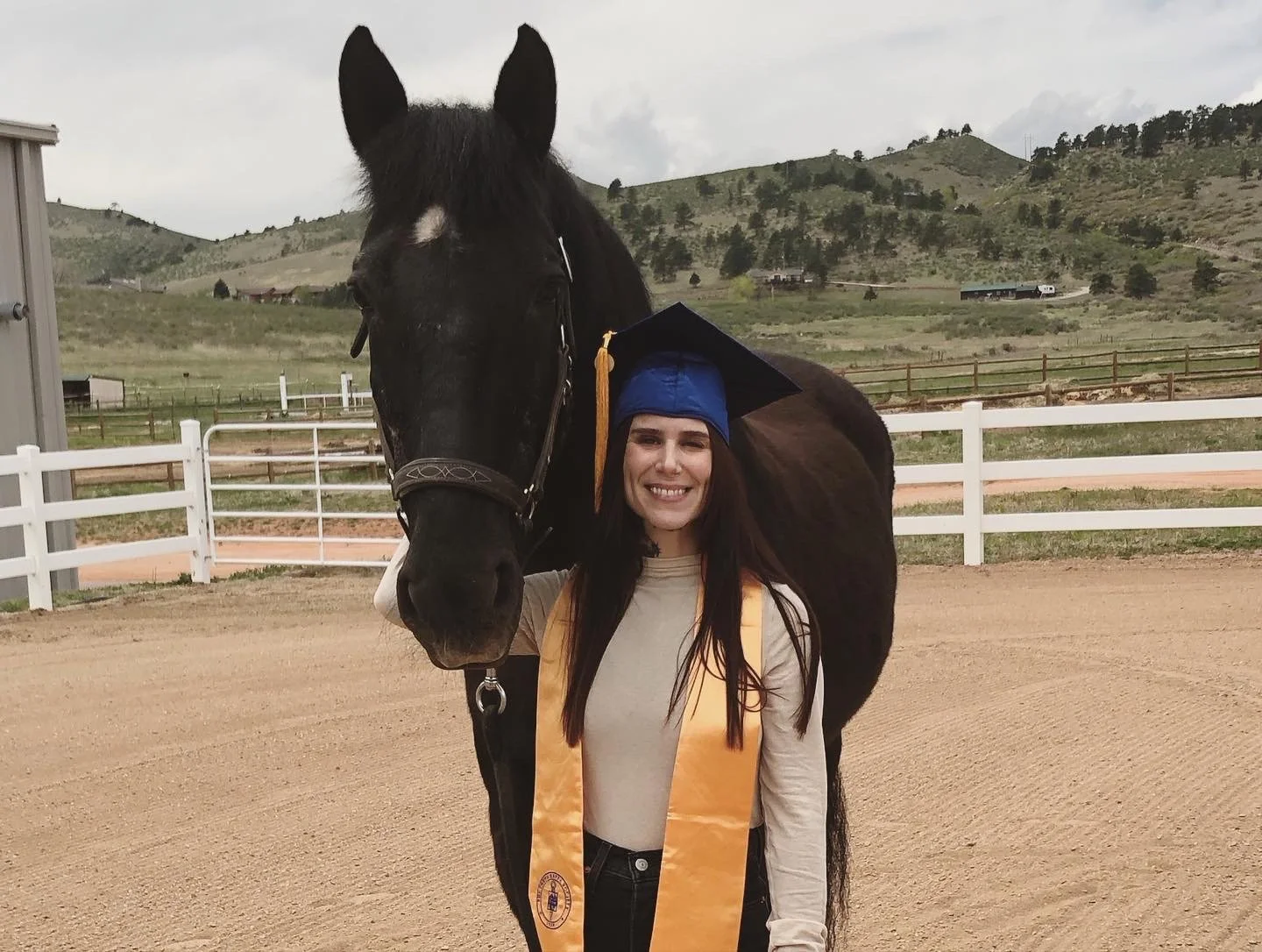
Lauren Towe brings her social work background to YouMeWe through program coordination, community outreach, volunteer support, partnerships, fundraising, and the behind-the-scenes work that helps turn ideas into opportunities for young people in care.
Shohei Ohtani Memorabilia Exhibition at Creative MOV aiiima
From October 13–17, YouMeWe NPO will be part of a special Shohei Ohtani memorabilia exhibition at Creative MOV aiiima in Shibuya Hikarie.
The exhibition will feature a collection of Ohtani memorabilia celebrating his career and impact on baseball, with a particularly rare highlight on October 16–17: the actual signed Ohtani jersey will be on display before it heads to auction. This is a unique opportunity to see a remarkable piece of modern baseball history up close while visiting one of Shibuya’s creative spaces.
Location: Creative MOV aiiima, Shibuya Hikarie Building, 8F (Hachi), 2-21-1 Shibuya, Shibuya-ku, Tokyo 150-0002
Learn more about YouMeWe NPO:
https://youmewenpo.org/

From Intern to COO: Meet Gio
Volunteer Spotlight | YouMeWe NPO
At 23, Gio is YouMeWe's Chief Operating Officer. He was born and raised in Japan, and he got here by starting as an intern who wanted to try something different.
An Unexpected First Step
Gio found YouMeWe through his school's internship program. Most of his classmates went to regular companies. He chose a nonprofit instead. "I got the impression that it would be interesting to work for an NPO as opposed to a regular company," he says. He has been with YouMeWe ever since.
Before that, Gio had almost no volunteering experience. That didn't hold him back. "The environment at YouMeWe was very beginner friendly, and I was quickly able to join the fold," he recalls. In a short time, he went from a newcomer learning the ropes to a leader running the team's day-to-day work.
The Summer That Shaped Him
Gio has helped run many YouMeWe events. The one he remembers most is Designing Artists Academy (DAA) 2024. DAA is a summer program that runs over several days. Each year, 30 to 40 children from children's homes take part in digital and creative workshops: photography, painting, illustration, dance, programming, craftwork and more.
"The management team and I were all quite inexperienced at the time, and there were many challenging moments," Gio says. "The responsibility for the safety and enjoyment of not only the kids, but also the staff and volunteers, was very daunting." The program was a success. For Gio, it was a turning point. "I will remember it as one of the first and most influential successes in my early life."
Looking Ahead: Digital Literacy For Every Child
Gio's next goal is to grow YouMeWe's digital literacy curriculum. He wants it to help children in institutional care think deeply about their relationship with technology, in classrooms all around Japan. "It would be hard but rewarding work," he says, "and very much a team effort."
A Message To Future Volunteers
Gio's own story shows you don't need experience to make a difference. All you need is to be willing to show up. "There are many ways you can help us in our mission of providing opportunities to children in care," he says. "If you are interested, please don't hesitate to reach out and get involved."
Want to join Gio and the YouMeWe team? Visit youmewenpo.org to learn how you can volunteer, partner with us, or support programs like Designing Artists Academy.
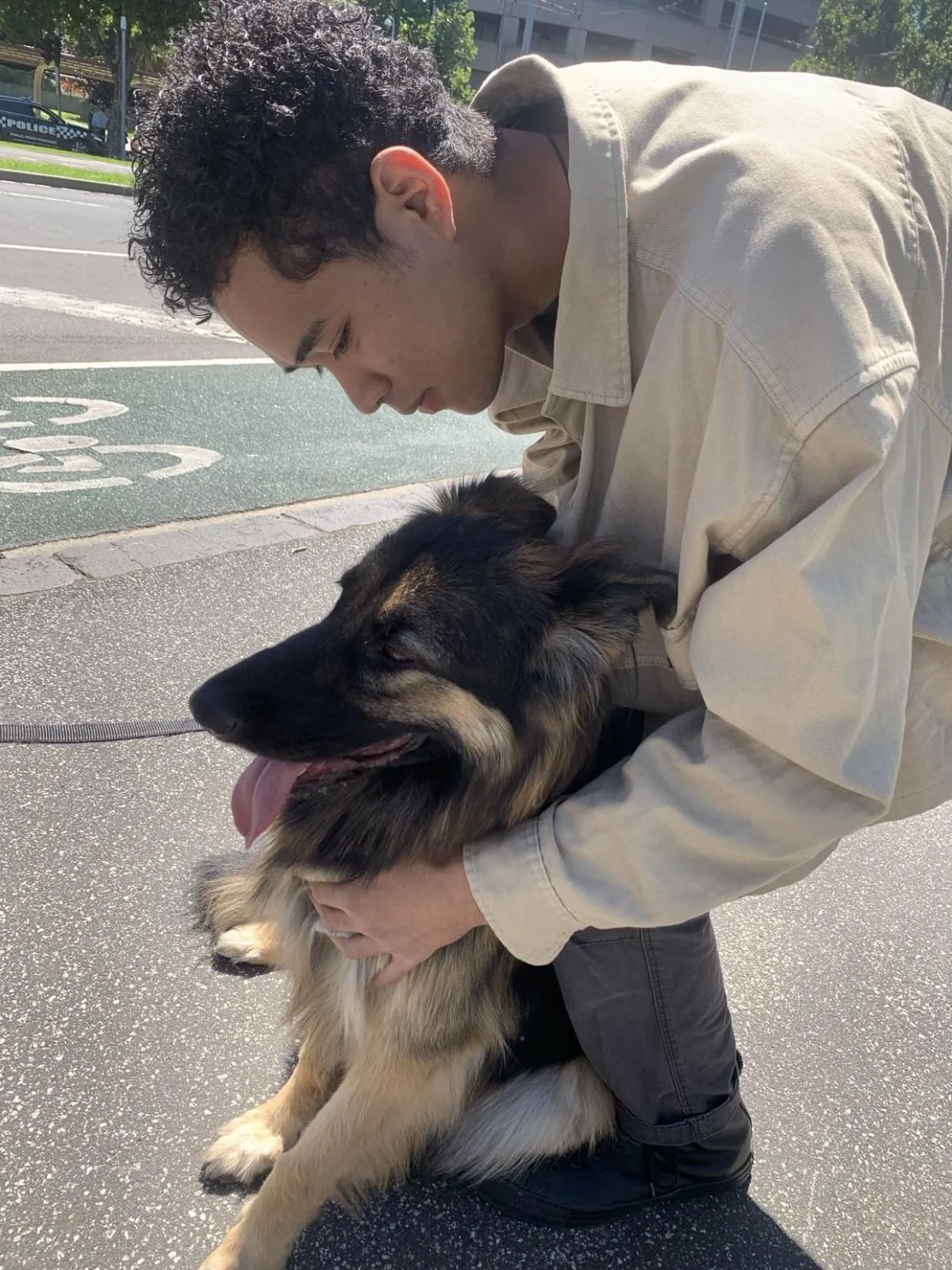
Gio taking a break with a four-legged friend. Off the clock, he brings the same warmth he shows at every YouMeWe event.
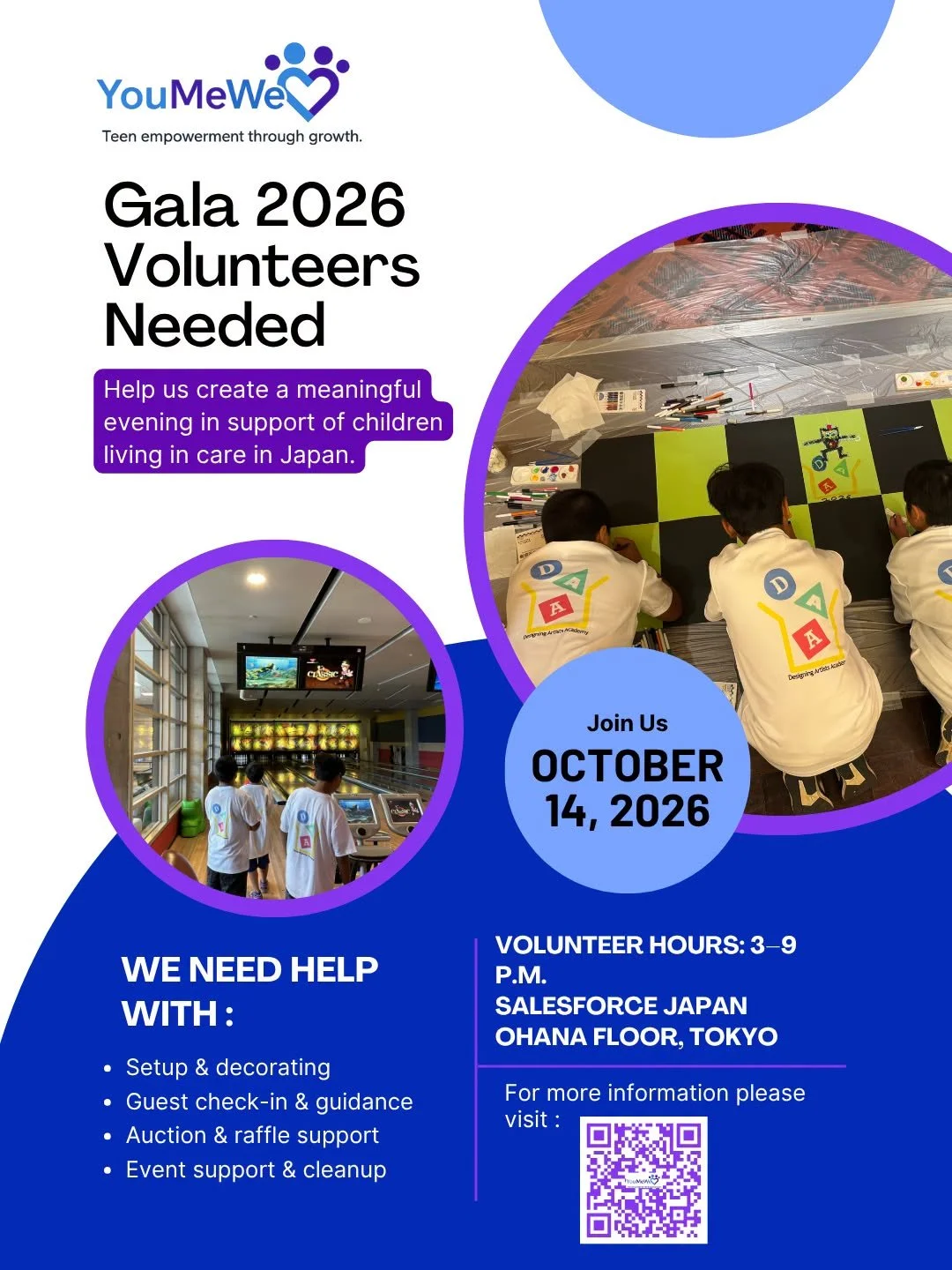
We’re looking for volunteers to help make the YouMeWe Hokkaido to Nagasaki Gala 2026 a meaningful evening in support of children and young people growing up in institutional care across Japan.
Join us on Wednesday, October 14, 2026 at Salesforce Tower Tokyo and help us bring the evening together behind the scenes.
Volunteer hours: 3:00 PM to 9:00 PM
Location:
Salesforce Tower Tokyo, ‘Ohana Floor
Nissay Marunouchi Garden Tower
1-1-3 Marunouchi, Chiyoda-ku, Tokyo 100-0005
We need help with:
Setup and decorating
Guest check-in and guidance
Silent auction and raffle support
General event support
Cleanup at the end of the evening
No special experience is required. We’re looking for dependable, friendly people who would like to spend an afternoon and evening supporting YouMeWe and the young people we serve.
Volunteers will also get to be part of an evening filled with food, entertainment, community, raffle prizes, our silent auction, and supporters from across Tokyo.
To volunteer, scan the QR code on the flyer, visit the Linktree attached to our social media profiles, or contact Lauren directly:
Gala information:
https://youmewenpo.org/gala2026
If you know someone who may be interested, please share this post with them. We would be very grateful to have you join us.
#YouMeWeNPO #Gala2026 #VolunteerTokyo #TokyoVolunteers #TokyoEvents #VolunteerJapan #CharityGala #ChildrenInCare #YouthEmpowerment #SocialImpactJapan
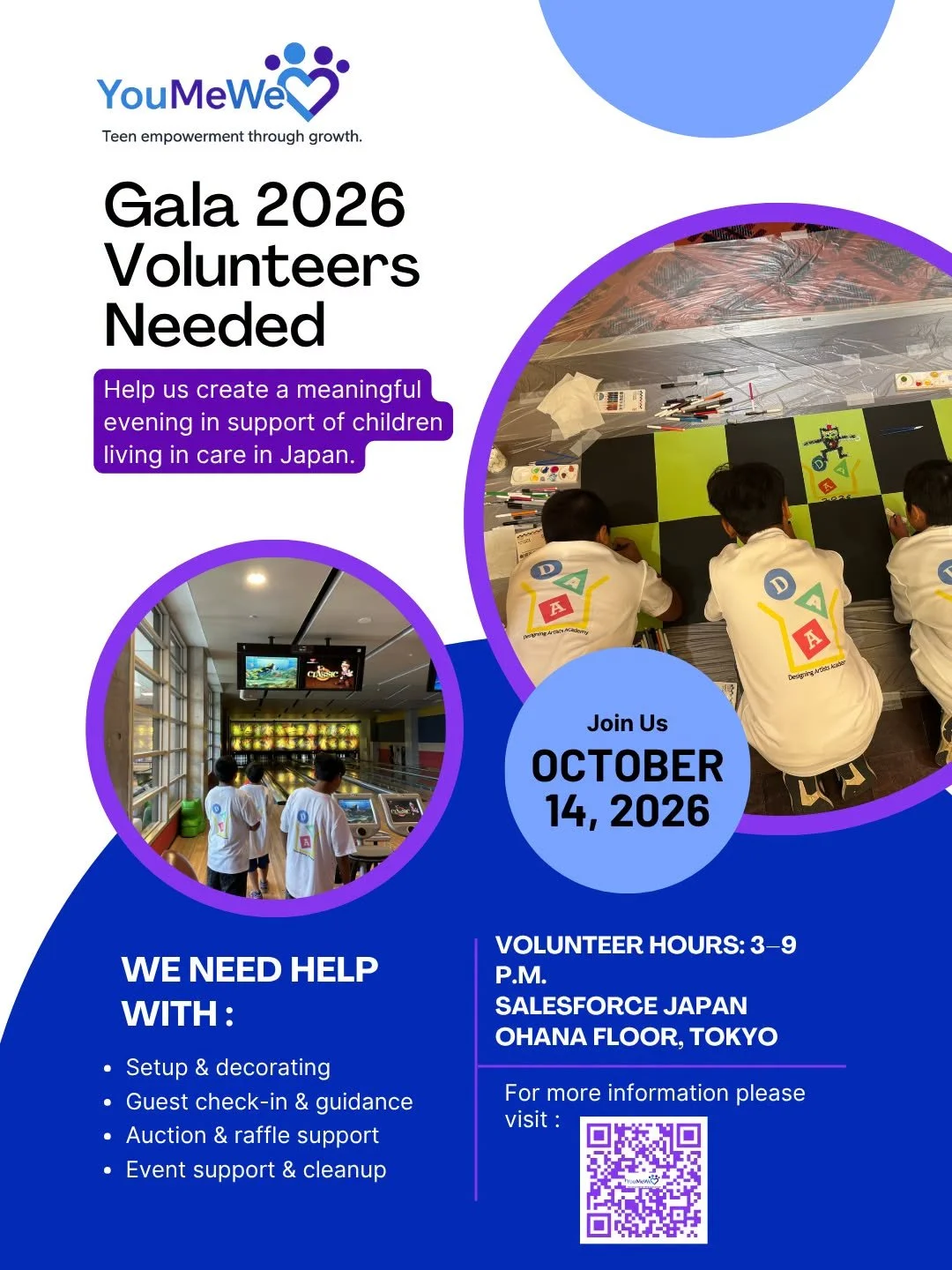
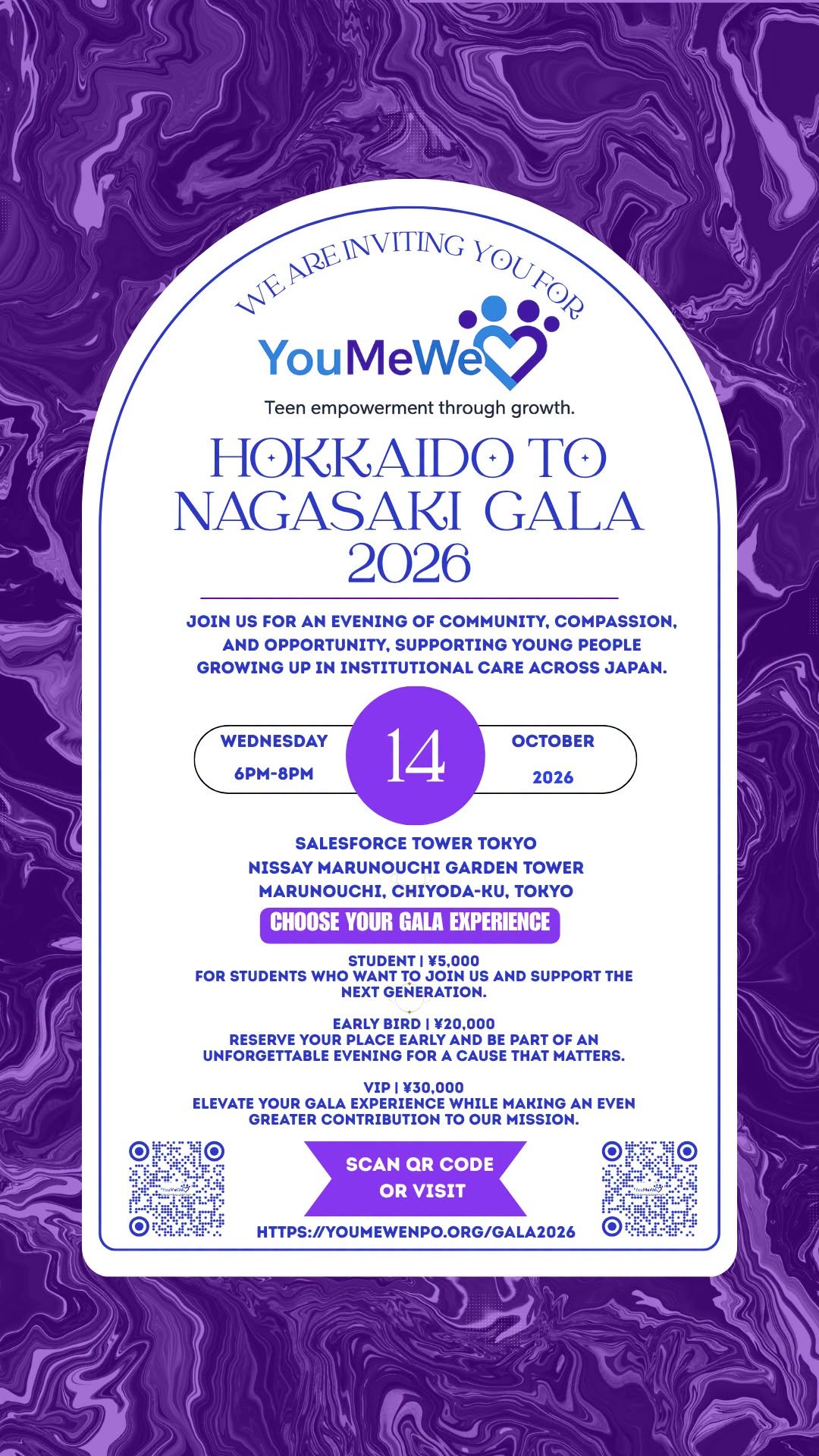
Join us for the YouMeWe Hokkaido to Nagasaki Gala 2026 for an evening of food, entertainment, community, and meaningful support for young people growing up in institutional care across Japan.
On Wednesday, October 14 from 6:00 PM to 8:00 PM, we’ll gather at:
Salesforce Tower Tokyo, ‘Ohana Floor
Nissay Marunouchi Garden Tower
1-1-3 Marunouchi, Chiyoda-ku, Tokyo 100-0005
The evening will include food and drinks, entertainment, opportunities to connect, special raffle prizes, and a silent auction featuring experiences and gifts generously donated by our supporters.
Tickets and Gala details:
https://youmewenpo.org/gala2025
You can also find the Gala, silent auction highlights, and our other upcoming events through the Linktree attached to our social media profiles
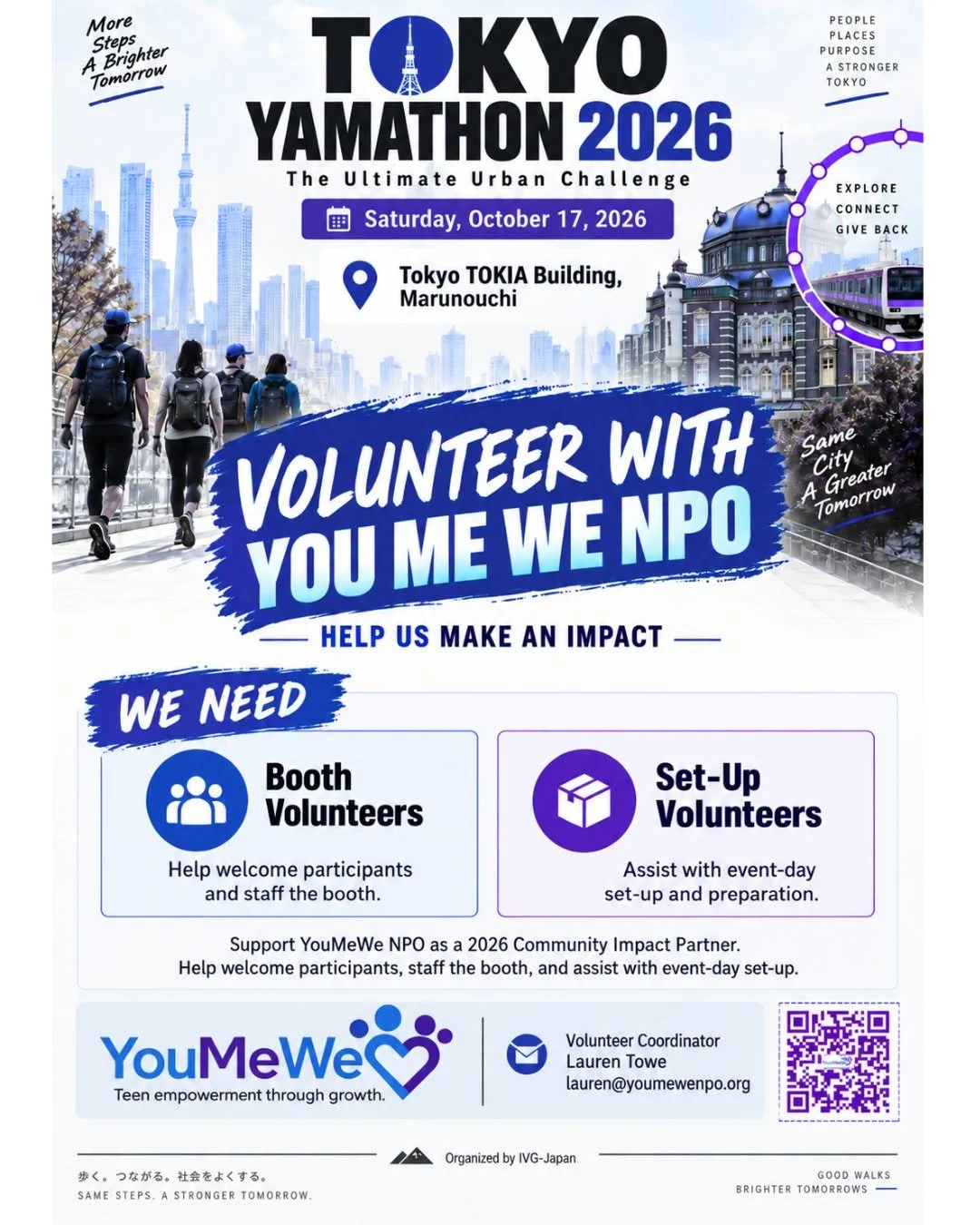
On Saturday, October 17, 2026, YouMeWe will be participating as a 2026 Community Impact Partner, and we need a few extra hands to help us make the day run smoothly.
We’re looking for:
Booth volunteers to welcome participants, share information about YouMeWe, and help staff our booth
Set-up volunteers to assist with event-day preparation before participants arrive
Location:
Tokyo TOKIA Building, Marunouchi
Date:
Saturday, October 17, 2026
Tokyo Yamathon brings people together to explore the city, connect with others, and give back. Volunteering with us is a simple way to be part of that energy while helping raise awareness for YouMeWe’s work supporting children and young people growing up in institutional care across Japan.
To volunteer, scan the QR code on the flyer, visit the Linktree attached to our social media profiles, or contact Lauren directly:
Bring a friend and join us for a day of community, connection, and impact.
#YouMeWeNPO #TokyoYamathon #Yamathon2026 #VolunteerTokyo #TokyoVolunteers #Marunouchi #CommunityImpact #VolunteerJapan #ChildrenInCare #YouthEmpowerment #SocialImpactJapan
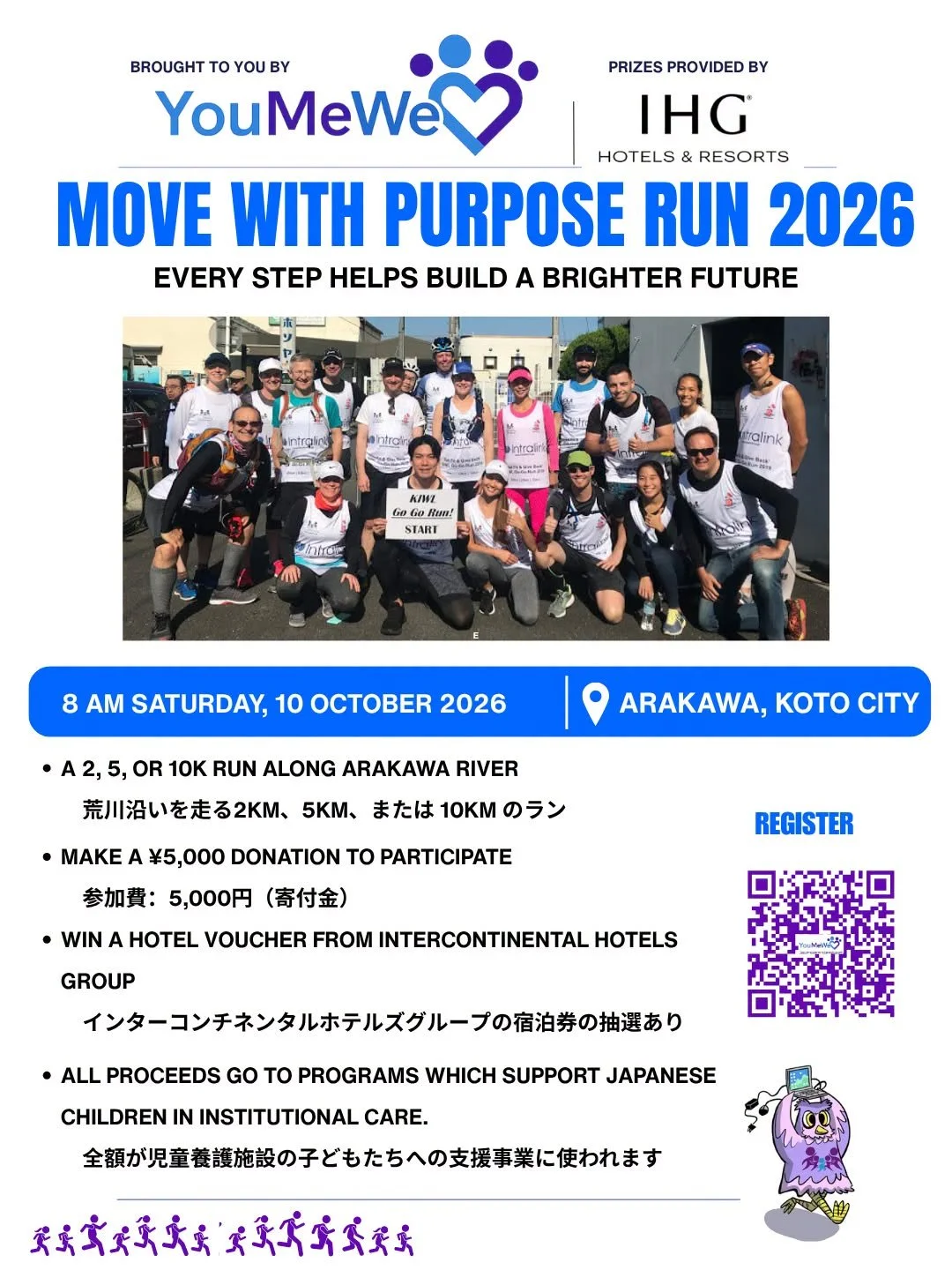
Join us for the Move With Purpose Run 2026 and make every step count.
On Saturday, October 10 at 8:00 AM, we’ll be gathering along the Arakawa River in Koto City for a 2K, 5K, or 10K run in support of children growing up in institutional care across Japan.
Participation is a ¥5,000 donation, and all proceeds support YouMeWe programs that help young people build skills, confidence, and greater independence for the future.
Participants will also have the chance to win a hotel voucher provided by IHG Hotels & Resorts.
Register using the QR code on the flyer, through the Linktree in our profile, or directly here:
https://youmewenpo.org/movewithpurposeride
Come run with purpose, bring a friend, and help us build a brighter future one step at a time.
#YouMeWeNPO #MoveWithPurpose #TokyoRun #TokyoEvents #CharityRun #ArakawaRiver #KotoCity #IHGHotels #FundraisingJapan #ChildrenInCare #RunForACause
RSVP
You are cordially invited to our Gala October 14th at 6pm - https://mailchi.mp/.../rsvp-you-are-cordially-invited-to...

Dinner for two, Champagne, and a very special evening at Girandole by Alain Ducasse.
We are delighted to feature this generous silent auction donation from @parkhyatttokyo for the YouMeWe Gala 2026.
One lucky bidder will enjoy dinner for two at Girandole by Alain Ducasse, including a glass of Champagne.
Join us on October 14 at Salesforce Tower Tokyo for an evening that brings together friends, supporters, partners, and community members in support of children and young people growing up in institutional care across Japan.
Tickets and Gala details:
https://youmewenpo.org/gala2025
You can also access everything through the Linktree in our profile.
#YouMeWeNPO #ParkHyattTokyo #Girandole #Gala2026 #SilentAuction #TokyoGala #TokyoEvents #FundraisingEvent #ChildrenInCare

A case of beautiful French wine could be yours at the YouMeWe Gala 2026.
We are very grateful to @wineprosperite for generously donating a case of Château de Thésée La Closerie Touraine Sauvignon Blanc to our silent auction.
Join us on October 14 for an evening of food, drinks, connection, and fundraising in support of children and young people growing up in institutional care across Japan.
Every bid helps YouMeWe continue providing mentoring, digital skills, education, and opportunities that support young people as they prepare for independent adulthood.
Gala details and tickets:
https://youmewenpo.org/gala2025
You can also find the Gala through the Linktree in our profile.
#YouMeWeNPO #Gala2026 #SilentAuction #WineProsperite #TokyoEvents #CharityGala #FundraisingTokyo #ChildrenInCare #SocialImpactJapan

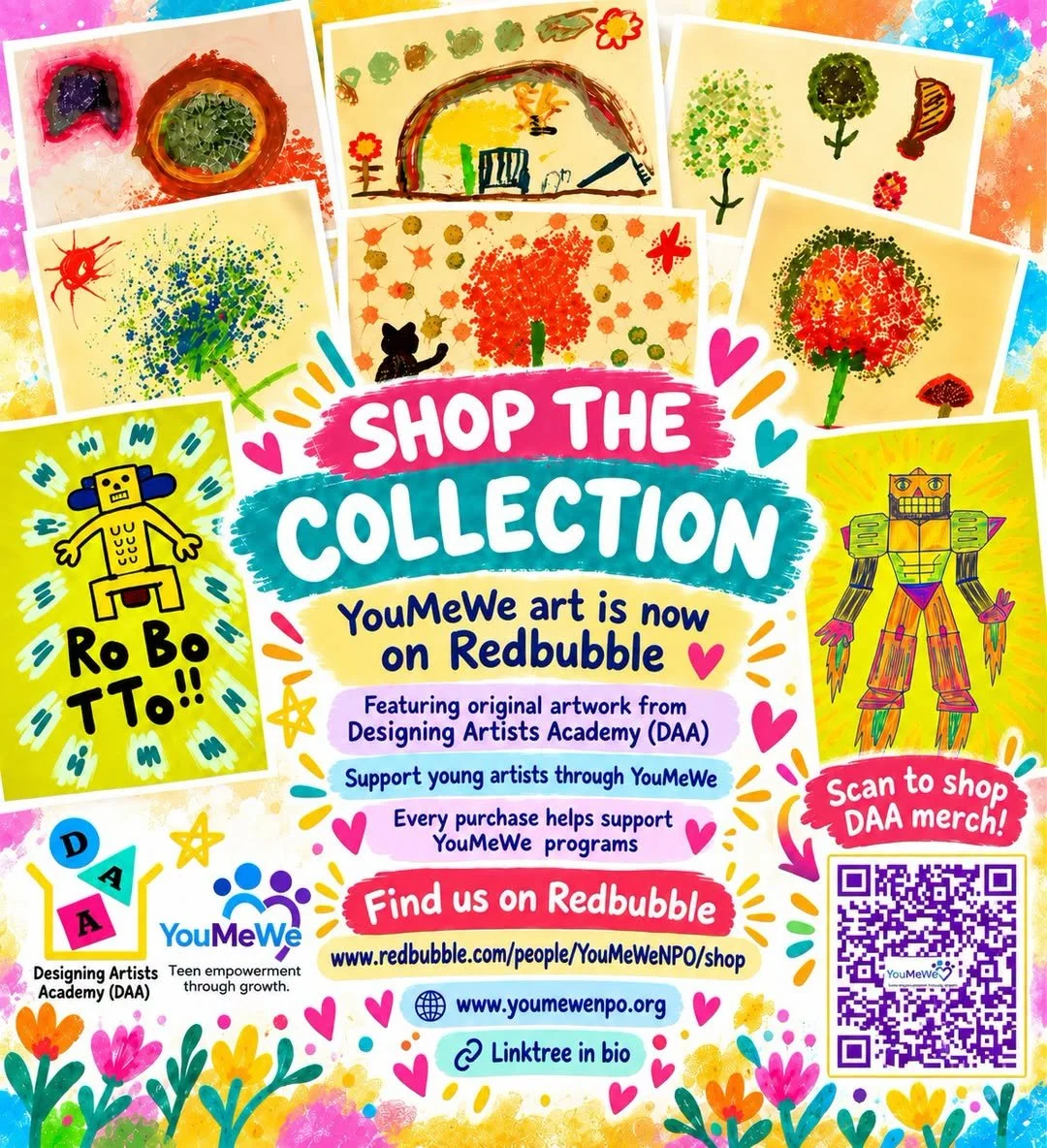
We are so excited to share that YouMeWe art is now on Redbubble.
This collection features original artwork created through our Designing Artists Academy (DAA), celebrating the creativity, imagination, and talent of the young artists we support.
Every purchase helps support YouMeWe programs and creates more opportunities for children and young people in care across Japan.
Shop the collection here:
https://www.redbubble.com/people/YouMeWeNPO/shop...
Learn more about YouMeWe:
Or visit the linktree in bio.
Thank you for supporting young artists and helping us grow meaningful opportunities through art.
#YouMeWe #DAA #DesigningArtistsAcademy #Redbubble #SupportYoungArtists #ShopForACause #ArtForImpact #YouthEmpowerment #JapanNPO #CreativeYouth
A little relaxation for a very meaningful cause.
Our YouMeWe Gala 2026 silent auction will include a 60-minute hot stone massage, generously donated by @elanajade__japan.
It is just one of the special experiences available during our October 14 Gala, with proceeds supporting YouMeWe’s work with children and young people growing up in institutional care across Japan.
Come spend the evening with us, enjoy food and drinks, explore our silent auction and raffle prizes, and help us continue creating opportunities for young people as they prepare for life beyond care.
Gala tickets and details:
https://youmewenpo.org/gala2025
You can also find the Gala through the Linktree in our profile.
#YouMeWeNPO #ElanaJade #HotStoneMassage #Gala2026 #SilentAuction #TokyoEvents #CharityGala #SocialGoodJapan #SupportYouth

Join us on Wednesday, October 14, 2026 at Salesforce Tower Tokyo and help us bring the evening together behind the scenes.
We’re looking for volunteers to help make the YouMeWe Hokkaido to Nagasaki Gala 2026 a meaningful evening in support of children and young people growing up in institutional care across Japan.
Volunteer hours: 3:00 PM to 9:00 PM
Location:
Salesforce Tower Tokyo, ‘Ohana Floor
Nissay Marunouchi Garden Tower
1-1-3 Marunouchi, Chiyoda-ku, Tokyo 100-0005
We need help with:
Setup and decorating
Guest check-in and guidance
Silent auction and raffle support
General event support
Cleanup at the end of the evening
No special experience is required. We’re looking for dependable, friendly people who would like to spend an afternoon and evening supporting YouMeWe and the young people we serve.
Volunteers will also get to be part of an evening filled with food, entertainment, community, raffle prizes, our silent auction, and supporters from across Tokyo.
To volunteer, scan the QR code on the flyer, visit the Linktree attached to our social media profiles, or contact Lauren directly:
[email protected]
Gala information:
https://youmewenpo.org/gala2026
If you know someone who may be interested, please share this post with them. We would be very grateful to have you join us.
#YouMeWeNPO #Gala2026 #VolunteerTokyo#TokyoVolunteers #TokyoEvents#VolunteerJapan #CharityGala#ChildrenInCare #YouthEmpowerment#SocialImpactJapan
What does it mean to give your time?
When people pick up the mantle and volunteer the most precious thing on earth, their time, young people gain someone who shows up, listens, and believes in their future.
Thank you to everyone who helps make these learning moments possible. Want to get involved? Email us at [email protected].
#YouMeWeNPO #VolunteerWithPurpose #YouthEmpowerment #DigitalInclusion #ForTheYouth